Consciousness in Rural Human Development
7, November, 2024
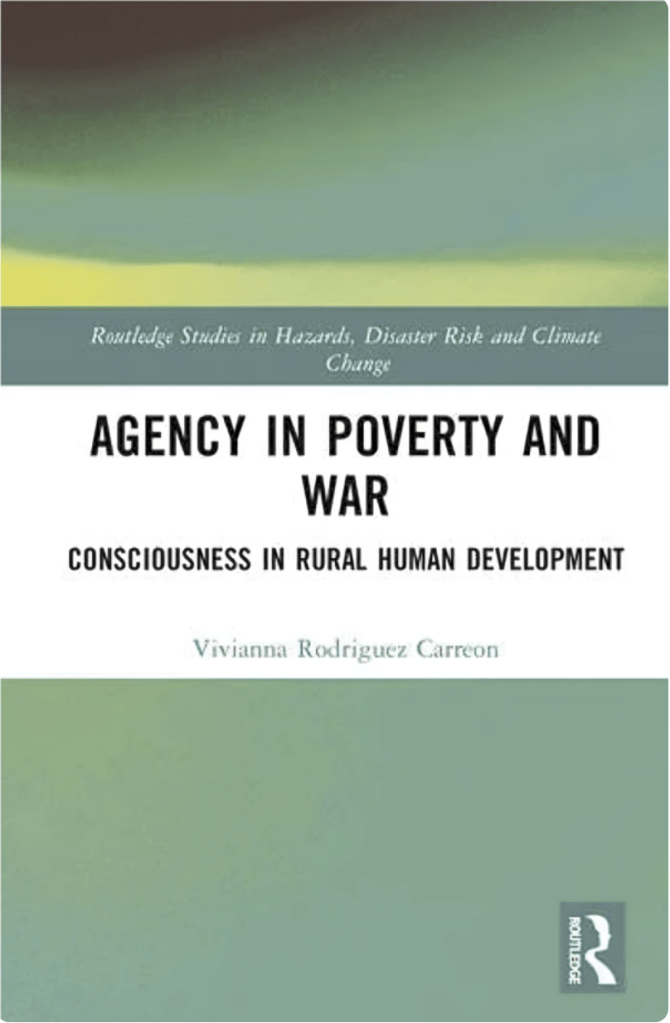
Agency in Poverty and War: Consciousness in Rural Human Development examines how people’s self-awareness is affected by both internal and external factors amid war and poverty. It explores how agency has influenced the inward human development of rural women who face triple disadvantages related to gender, ethnicity, and access to economic power. It presents a multidisciplinary perspective on the intersection of war and poverty through narratives of surviving women. It advances understandings of how rural people, peasants, and Indigenous peoples of Peru, particularly women, have experienced poverty and war as a combination of oppression, repression, and aggression. It explores how their agency is affected and how it evolves during and after conflict in their search for truth and justice. It does this by taking the capability approach combined with insights from perspectives on raising consciousness and inner transformation in human development in which awareness of rural people’s experience enables them to be free and can move them from survival to conscious agents.
This book offers new narratives to evaluate the hazards of poverty and war and the potential human security for rural people agency and empowerment in building peace. It will be of interest to scholars and practitioners of development studies, peace and security, political Latin America geography, rural communities, peace and conflict studies, human development and political studies.
PART I
Introduction: The Inner and Outer Approach for
Agency and Empowerment
1 The point of departure: Armed conflict in rural areas of Peru
2 Consciousness-capabilities under the umbrella of human development and human security
PART II
Context: Dynamics of Human Insecurity
3 Poverty and its forms of oppression
4 War and its rawness through cruelty and repression
PART III
Analysis: Transitions of Injustice and Justice
5 In the search for truth and justice
6 Participation for peace
PART IV
Conclusion: Identifying Threats to the Vital Core
7 Acknowledging the power gap
8 A hologram perception
 Vivianna Rodriguez Carreon